Image

In its twelfth year, Bass Connections continued to unite Duke faculty, staff and students around urgent, complex challenges — locally and around the world. Through intellectually diverse, project-driven teams, students enriched their academic experience while learning how boundary-spanning research can generate insight and impact far beyond the classroom.
During the 2024-2025 school year, 1,489 members of the Duke community participated in hands-on research through Bass Connections. The program supported 79 year-long project teams, three summer research programs and 22 student research awardees pursuing faculty-mentored projects.
Participants from nearly every corner of the university engaged in projects spanning an extraordinary range of topics. Sociologists, theologians, psychologists and global health scholars examined the nature of hope — where it comes from and how it shapes individual and collective lives — while faculty and students from visual arts, neurology and computer science worked together to make cutting-edge neuroscience more accessible to public audiences. Other teams crossed geographic, cultural and disciplinary boundaries to explore political activism in Brazil, the social factors that draw patients back to emergency departments after surgery and the use of digital tools to understand alcohol use across global populations.
Working within demographically, culturally and intellectually varied teams, students learned to communicate across difference and approach problems from new angles. Nearly two-thirds of teams also partnered with external organizations and community partners in the Triangle and abroad, strengthening students’ cultural competency and helping them envision how their academic work can inform practice beyond the university.
This year was also marked by creativity and a willingness to engage difficult questions. In partnership with the Provost’s Initiative on the Middle East, Bass Connections launched a pop-up theme focused on geopolitical conflict and humanitarian crises in the region and beyond. Nine project teams examined issues ranging from water access in Gaza and aid distribution in South Sudan to the necessity of civil discourse amid deeply contested debates.
Bass Connections also released a collection of 17 case studies highlighting collaborative, project-centered learning initiatives from a variety of colleges and universities across North America. This open-access resource demonstrates the value of project-driven learning and offers practical models for institutions seeking to develop or expand similar programs.
Together, the stories in this report reflect the breadth of Bass Connections and the depth of engagement that defines the program.
A total of 1,489 members of the Duke community took part in 79 year-long project teams and more than 30 team-based summer research projects.

Additionally, many more students and faculty were involved in more than 65 courses that incorporated interdisciplinary, team-based learning into a semester-long course structure. Through these courses, students gain expertise in addressing complex societal problems and working on interdisciplinary teams.
More than two-thirds of Bass Connections project teams worked with nearly a hundred partners outside Duke, including nonprofits, universities, school systems, hospitals, government agencies and private companies.
In North Carolina’s Bogue Sound, climate change and other stressors have led to recurring oyster mortality events, with farmers seeing 90% or more of their oysters die in a few weeks. This team, including faculty and students from earth and climate sciences, marine science and conservation, and environmental sciences and policy, examined how environmental conditions and farming practices affect oyster health in the Sound.
The team developed an interactive data sharing platform to share their findings with farmers, scientists and the public. This tool enables users to explore real-time environmental and biological data, supporting informed decision-making. The project is laying the groundwork for a broader study involving more sites and new variables to better understand the impact of climate change on aquaculture.

Although hope is widely recognized as a powerful force for resilience, current psychological models reduce it to individual goal pursuit, missing its emotional depth, cultural diversity and spiritual dimensions. On this project team, faculty and students from the fields of social science, theology, psychology and more set out to explore the meaning of hope, including the myriad of ways people experience it in their lives.
By focusing on both secular and spiritual perspectives — especially the under-explored view of hope as a religious competency — the team sought to understand hope not just as a coping mechanism, but as a preventative factor in mental health and a contributor to human flourishing.
The project highlighted the importance of listening to marginalized voices, embracing emotional complexity and recognizing hope as both a personal and communal resource for navigating life’s challenges. By identifying and analyzing recurring themes across 76 semi-structured interviews, the project contributed to a deeper and more inclusive scientific understanding of hope.

Interventional radiology (IR) is an innovative field that uses image-guided techniques for treatments, often reducing the need for traditional surgery. However, most aspiring physicians do not get hands-on experience with IR until late in their medical training, and traditional training tools do not fully capture the feel or complexity of these procedures.
This project team, comprising faculty and students from the disciplines of medicine, engineering, computer science and more, sought to address this critical gap in medical education. The team aimed to develop an immersive virtual reality simulation that integrates visual, tactile and biometric feedback to provide medical students with realistic, interactive IR training early in their education.
By merging cutting-edge VR technology with tactile learning, the team developed a high-fidelity simulation that could reduce reliance on costly in-person training while improving procedural readiness. With further development and user testing, VR-HEAL could serve as a scalable, innovative model for medical training in complex specialties like IR.

Despite global demands for computing expertise, Black, Latine, American Indian/Alaska Native, and Native Hawaiian/Pacific Islander people remain significantly underrepresented in computer science and related professions.
This team, including faculty and students from fields such as sociology, computer science and statistics, investigated how undergraduate computer science students in the U.S. and abroad conceptualize, perceive and experience race in their academic and professional environments. The project focused on how definitions of race and beliefs about biological differences shape the experiences of students in computing spaces.
Drawing on survey responses from more than 550 students across 50 institutions and 46 follow-up interviews, the team’s analysis found that students perceived racial bias as less prevalent in academic versus professional environments. These results suggest that addressing misconceptions about race and bias can help foster more welcoming learning and working environments that broaden participation in the computing field.

As climate change increasingly fuels anxiety and feelings of powerlessness — especially among children and teens — this project explored how arts-based education can cultivate agency, resilience and hope in the face of the climate crisis. Bringing together faculty, students and community partners across education, the arts and environmental engagement, the team examined how creative practices can transform climate despair into meaningful action.
Through photography, storytelling and nature-based learning, the team worked with local educators and elementary school students to reconnect young people with their environments. Through hands-on projects like “Operation Spark Birds,” students engaged closely with local ecosystems, learning to observe, reflect and see themselves as active participants in environmental stewardship rather than passive witnesses to crisis.
The project also extended beyond classrooms through a student-curated exhibition at the Nasher Museum of Art, Climate Hope: Photographic Works from the Nasher Collection. By pairing environmental imagery with personal reflections, the exhibition invited audiences of all ages to reframe climate change not as a source of paralysis, but as a call to action. Together, the team’s educational programs and public-facing work demonstrate how art can serve as a powerful tool for cultivating climate hope, empowering individuals to imagine — and help build — more sustainable futures.

Tech platforms — from Etsy and Roblox to Spotify and YouTube — have a major impact on individuals and society, but the ethics of these companies are not always well monitored. With faculty and students from the fields of public policy, computer science and more, this team set out to explore how companies can demonstrate responsible behavior and how governments can more effectively evaluate that behavior through a platform accountability framework.
The team authored a white paper proposing policy solutions related to intellectual property, anti-competitive behavior, data privacy and child protection. Their research was presented to industry stakeholders in Washington, D.C., and further translated into accessible formats, including infographics, one-pagers and blog posts, aimed at informing public discourse and policymaking.
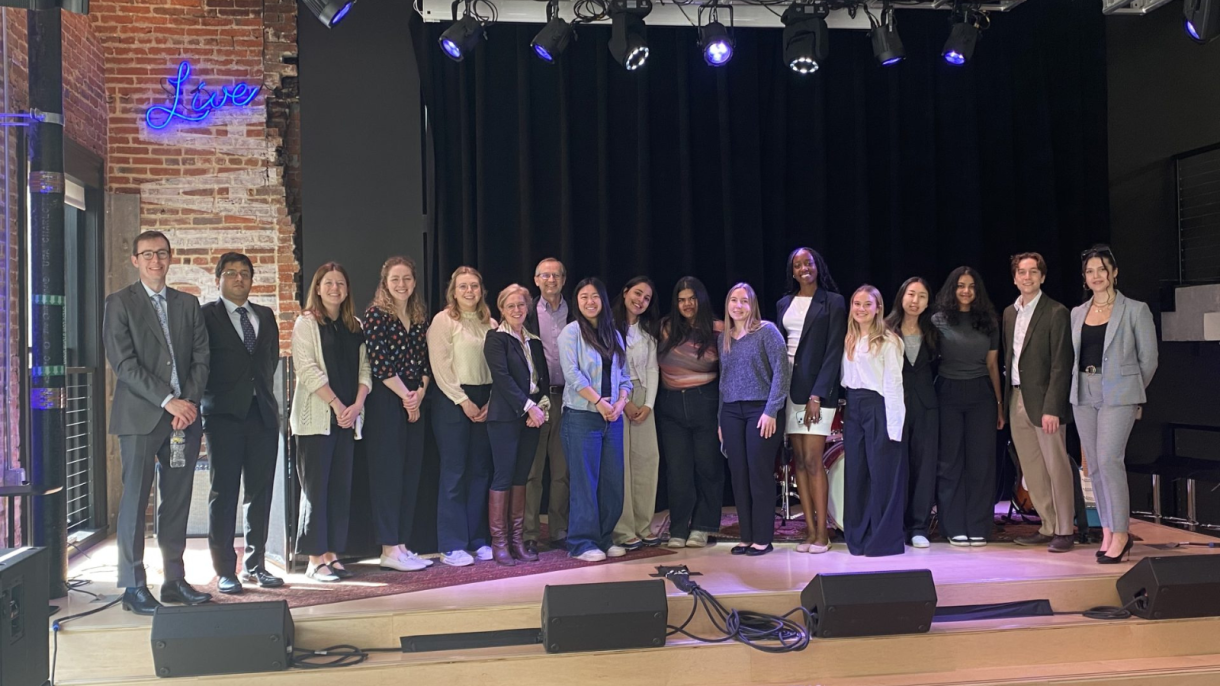
The project-based, collaborative learning offered by Bass Connections often has a profound impact on students’ academic and career trajectories. This year, several students reflected on the challenges and triumphs of their Bass Connections experience. Four of their perspectives are featured below.
Project Teams:
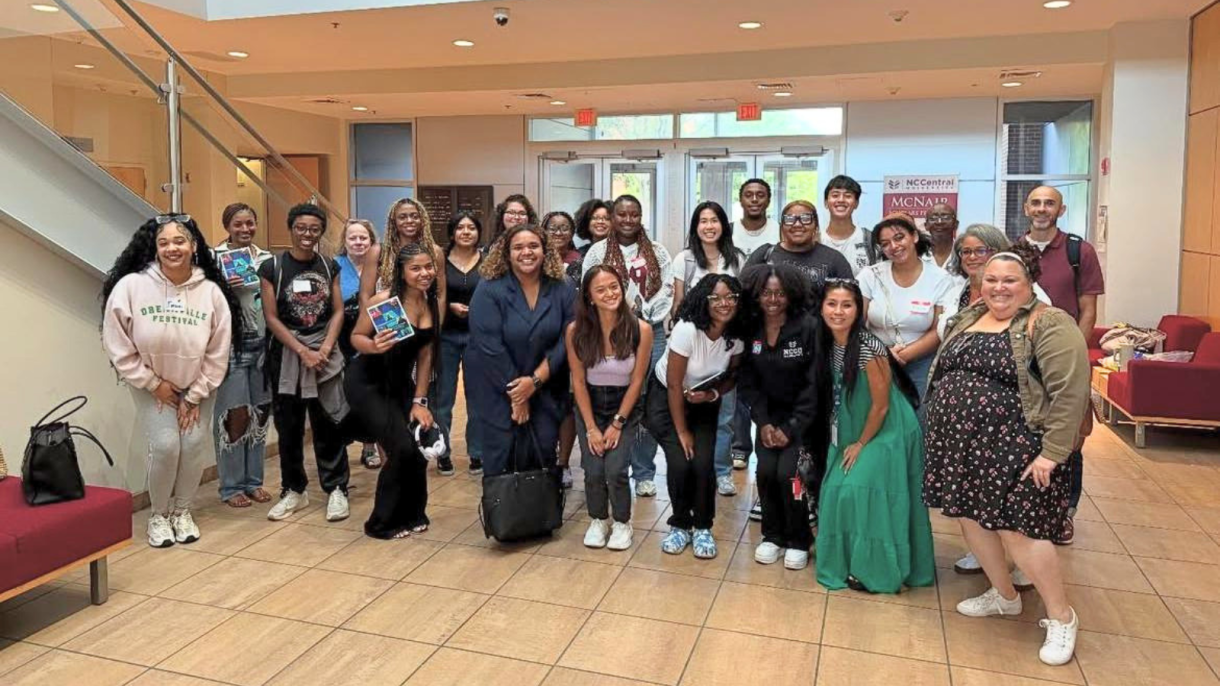
What I appreciate most is that my views are never dismissed because I’m younger — everyone's input is valued equally. We often discuss how our personal experiences relate to the topics, bringing diverse perspectives.
Project Teams:

While the goal of my Bass Connections project is to mentor young, aspiring scientists, I have personally benefited both from the teaching experience and mentoring I have received from Duke’s dedicated faculty members.
Project Team: Using Drones to Monitor the Health of Endangered Elephants (2024-2025)

I was able to work with people from different academic backgrounds and see how different fields contribute to solving environmental problems through collaboration.
Project Team: Reexamining Nuclear Power in the Carolinas and Beyond (2024-2025)

My Bass Connections experience has been pivotal in shaping my academic trajectory. It has reinforced my commitment to pursuing a career in energy-related policy.
In partnership with the Provost’s Initiative on the Middle East, Bass Connections launched a pop-up theme for teams exploring the humanitarian implications of geopolitical conflict in the Middle East and elsewhere across the globe. This theme included nine project teams, four of which are continuing in the 2025-2026 school year.
While diverse in method and focus, the projects shared a commitment to centering the human dimensions of conflict and imagining more just and sustainable responses. Review summaries of all pop-up team outcomes or browse the selected highlights below.

Team: Diaspora, Exile and Interreligious Dialogue
Palestinians and Jews both constitute diasporic cultures, each with a community in Palestine/Israel. Both experienced, at different points in their history, traumatic exiles from the land, and both have been dreaming of return, restoration and healing. Their histories and traditions share fundamental features; yet they remain deeply at odds.
This Bass Connections team set out to mine two millennia of interreligious conversations between Jews, Christians and Muslims to create a new body of scholarship on diaspora and exile in the Abrahamic traditions. The team also strove to increase civil and religious dialogue on campus by engaging with the Transformative Ideas Program and the Provost’s Initiative on Pluralism, Free Inquiry and Belonging.
Team members completed 13 individual projects, catalogued on their team website, with topics as varied as English puritan migration, the Spanish convivencia, understandings of the Palestinian nakba, material culture in the aftermath of the Holocaust, and the use of language as an instrument of colonialism. The papers generated by the team were presented at an international conference in Berlin organized by the Katholische Akademie and the International Network for Interreligious Research and Education.
“The project proved an incredible learning experience for me and the participants, enlarging both our research horizons and conceptual and political ones.” –Malachi Hacohen, Team Leader (check out his reflections and advice on leading a Bass Connections team)
Team: Humanitarian Impacts of the War in Gaza: Shelter, Water and Sanitary Solutions
This team partnered with Clean Shelter, a Germany-based NGO founded by two women, one Israeli and one Palestinian, which focuses on distributing water, sanitation and hygiene infrastructure in Gaza. The project served as a practicum for students interested in making an impact now and learning how to operate in humanitarian spaces as future leaders.
Team members learned the functions of a modern NGO through work in grant writing, media relations, internal operations consulting and research into on-the-ground applications of humanitarian technology.
Students on the team led projects such as the facilitation of Clean Shelter's fiscal sponsorship, a financial arrangement that vastly expanded their donation capacity in the U.S.; a press and fundraising tour to Durham by the Clean Shelter team; and the design of a practical, cost-effective water filtration system for use on the ground in Gaza. The team’s work was featured in Duke Engineering News and appeared in IndyWeek, The Times of Israel and Al Jazeera English.
Team: Meeting the Need for Reconstructive Surgery in Palestine
The war in Gaza has destroyed existing healthcare infrastructure and created an immense need for reconstructive surgery, which can help injured individuals return to their daily lives and livelihoods. This project team was created with the goal of developing an actionable blueprint to reduce the delay in reconstructive care delivery in the aftermath of conflict.
The team divided that goal into three subgroups. The first subgroup aggregated multiple public data sources cataloging attacks, injuries and other predictor variables such as population density and infrastructure characteristics to build and test models with the intent of projecting the total volume of reconstructive surgery need.
The second worked to create a surgical capacity assessment tool accounting for a comprehensive set of necessary components for reconstructive surgery at a granular level (e.g., equipment, personnel, infrastructure and ancillary support). The third subgroup combined operative logs and case reports from surgeons and hospitals in Gaza to analyze the types of surgeries being done currently, the distribution of injuries and the surgical outcomes.
Team: The Science of Refugee Camps
Managing a refugee camp requires vast amounts of data on various subjects, such as demographics, public health, education, security and on- and off-boarding. Unfortunately, the number of refugees is increasing, and the resources available to assist them are diminishing. These trends imply a need for evidence-based decision making and better cost-benefit analyses in addressing refugee problems.
This project team set out to build bridges between statisticians and those who support and manage refugee camps. For example, team members worked with staff who run The Hive, a database maintained by the U.S. United Nations High Commissioner for Refugees (UNHCR), to provide metadata that enables analysts to access information more efficiently. They also interviewed refugee camp managers to better understand their needs.
The team organized a conference for key experts engaged in refugee support and statistics, which included representatives from the UNHCR, the U.S. UNHCR, the International Statistical Institute and the American Statistical Association. There, students presented papers that will be published in a special issue of Chance, a journal of the American Statistical Association.
“I’m a statistician, so interdisciplinary collaboration is baked into my career. But teaching in the Bass Connections program introduced me to public policy majors and religious studies majors to a greater degree than usually happens. I think some of them will become durable friendships.” –David Banks, Team Leader (check out his reflections and advice on leading a Bass Connections team)
On April 16, 2025, students from more than 75 project teams shared their research findings at the ninth annual Fortin Foundation Bass Connections Showcase.
Over 700 students, faculty, staff and community partners gathered for the event in Penn Pavilion, where students presented their work through poster presentations and interactive displays.
Provost Alec Gallimore celebrated the work of teams in his opening remarks: “I often say that Duke’s superpower is our collaborative, interdisciplinary spirit, and the success of Bass Connections year after year certainly proves it.”

Over fifty project teams shared their research posters with showcase guests. A panel of judges selected the winners of the 2025 Bass Connections Poster Competition.
“Environmental Impacts on Farmed Eastern Oysters in North Carolina,” Climate Change Impacts on Farmed and Wild Oysters
Twenty-one teams elected to share their research through interactive displays. These displays featured short films, simulations, prototypes, field tools, photographs, digital media and more. A panel of judges selected the winners of the 2025 Bass Connections Award for Best Interactive Display.
This award recognizes outstanding faculty and staff team leaders for their creativity, intellectual vision and commitment to student mentoring on Bass Connections project teams.
Winner: Mara Revkin (Associate Professor of Law and Political Science), Evidence-Based Humanitarian Aid Delivery in South Sudan
This award recognizes graduate/professional students and postdocs who have made tremendous contributions to the success of their team and positively shaped their fellow team members’ experiences.
Winner: Mishka Malinowski (Ph.D. Candidate in Ecology), Using Drones To Monitor the Health of Endangered Elephants
Five graduate students and 30 undergraduates will pursue faculty-mentored research projects this summer and next year with grant funding from Bass Connections. These awards include 10 team projects with multiple students who span schools and academic levels. The diverse range of topics include developing AI applications for traumatic brain injury care; the genetics of deep-diving adaptations in whales; the impact of mindfulness interventions on stress management for undergraduate students; the development of new medical appliances to improve the lives of stoma patients in Tanzania and Uganda.
Across disciplines, borders and differences, Bass Connections continues to show how team-based research can turn hard questions into shared understanding and practical solutions. Bass Connections exemplifies the power of collaboration — not only to advance knowledge, but to build bridges between people, ideas and the world beyond Duke.