Image
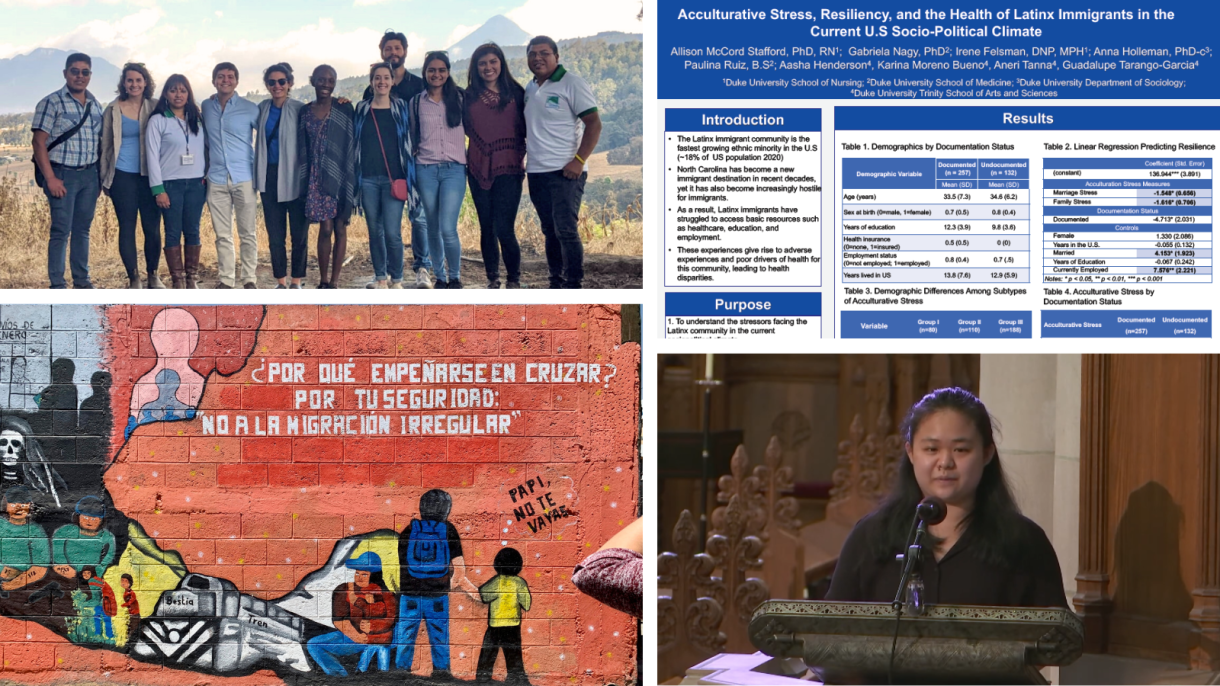
Often cited as one of the most important issues facing the U.S. and countries across the globe, immigration raises complex issues about identity, culture, economics, social services, health care and security.
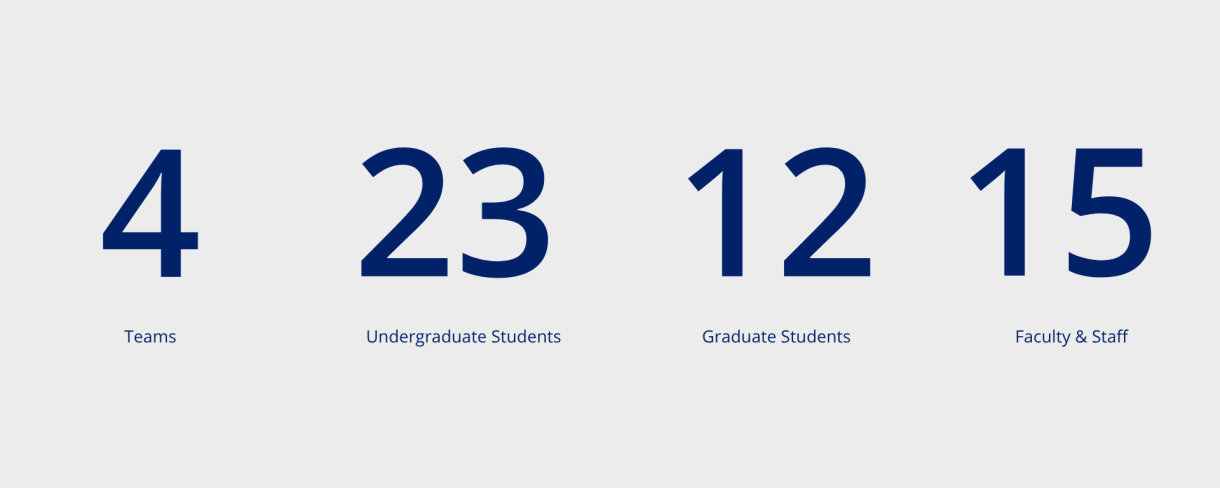
From January 2020 through June 2021, four project teams explored social, political and economic issues related to immigration. The projects ranged from probing tensions between national security and human rights, to examining the Guatemalan deportation crisis, to investigating the impact of the immigration climate on mental health outcomes of Latinx immigrants in North Carolina, examining how theologians, scholars and pastors have explored the immigrant experience in their sermons at Duke Chapel.
Team members presented their work at the virtual 2021 Bass Connections Showcase alongside 70 other project teams.
Team leaders: Duke Law (Nita Farahany), Science & Society (Dylan Stonecipher, Meredith Van Natta)
Student participation: 10 undergraduate students, 2 graduate students
Building on NIH-funded research on biometrics and immigration in the Farahany Science, Law and Policy Lab, this project team examined how the U.S. collects and uses immigrants’ biometric data to probe the ethical tensions of balancing national security alongside the rights of migrants.
Team members conducted a gap analysis to identify current uses of biometric data in migrant surveillance; explored how migrants’ biometric information is gathered in the U.S.; assessed proposed plans for additional biometric data collection, including which policies govern the collection and use of this data; and investigated the potential misuse of such data by identifying case studies of (mis)use in the U.S. and other countries.
The team prepared comments on a rule proposed by the Department of Homeland Security intended to dramatically expand the collection of biometric information, including DNA, from migrants. The proposed rule was later withdrawn, in large part due to the immense amount of public pushback.
Members of the team also conducted research into the Department's COVID-19 response and drafted guidance regarding the potential “reopening” of the U.S. immigration system in a post-COVID world. Some members of the team presented research related to the project at the American Society for Bioethics + Humanities conference in October 2020.
Team leaders: Arts & Sciences: Economics (Erica Field), RTI International (Pamela Lattimore), Sanford School of Public Policy (Jay Pearson), Arts & Sciences: Political Science (Erik Wibbels)
Student participation: 12 undergraduate students, 8 graduate students
Community Partners: Church World Services (Durham), RTI International, Te Conecta
Governments deport millions of migrants every year, but little is known about the impacts of deportation on migrants, themselves, or the places they are forced to leave or return to.
This project team examined the Guatemalan deportation crisis from the perspective of recent deportees in Guatemala City and members of North Carolina’s Guatemalan community. After analyzing large-scale surveys of deportees in Guatemala City, team members traveled to Guatemala in March 2020 to meet with community organizations and government entities across the country.
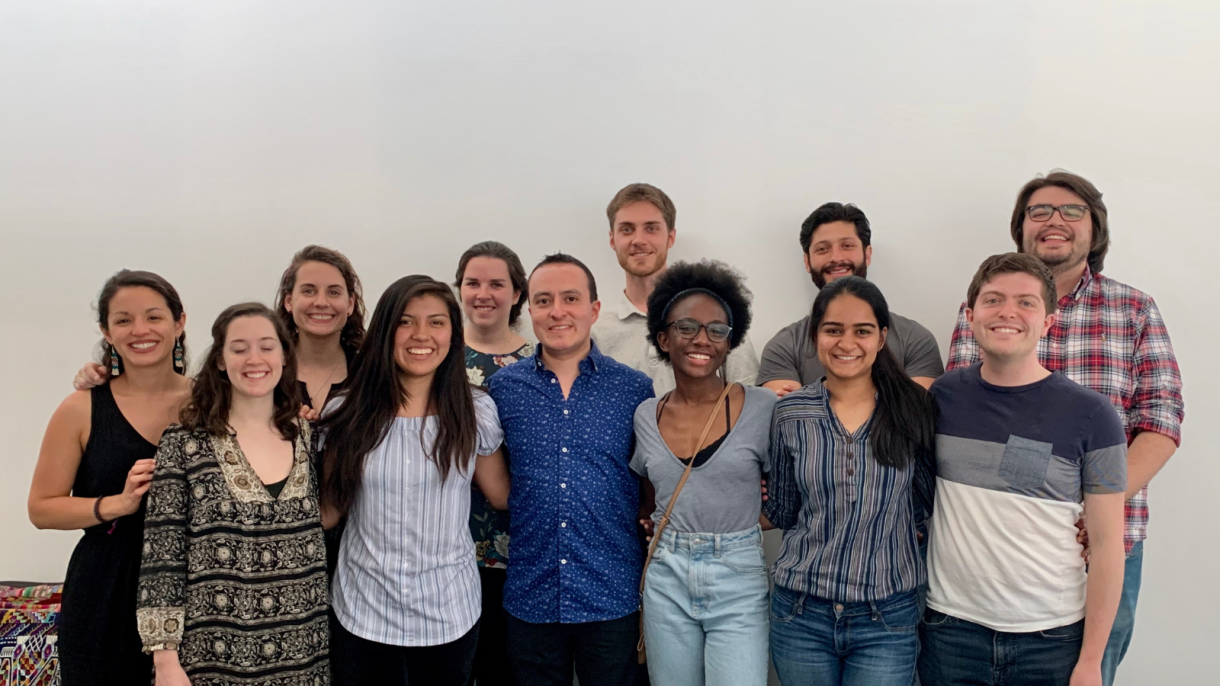
Team leaders: School of Nursing (Irene Felsman, Allison Stafford), School of Medicine: Psychiatry and Behavioral Sciences (Gabriela Nagy Carrasquel)
Student participation: 4 undergraduate students, 1 graduate student
Community Partners: El Centro Hispano
This project team examined the impact of the U.S. sociopolitical climate from 2018 to 2020 on the mental and physical health outcomes of Latinx immigrants in the United States. Using data from the “SER (Salud/Health, Estres/Stress, y Resiliencia/Resiliency) Hispano Project” – a longitudinal study of health among 391 young adult Latinx immigrants in North Carolina – team members explored how the documentation status of Latinx young adult immigrants impacted their levels of stress and resiliency, as well as self-reported physical health.
Team members found that documentation status is an important social driver of health for Latinx immigrants. Results also highlighted the heterogeneity of the Latinx population and reinforced the importance of systems and organizations seeking to understand the variety of experiences and barriers that immigrant populations may face to inform programming.
Team leaders: Divinity School (Miriam Cho, Peace Lee (Th.D. Student), Jerusha Neal, Luke Powery)
Student participation: 3 undergraduate students, 1 graduate student
The Duke Chapel Recordings Digital Archive contains sermons by leading American theologians, scholars and pastors who preached at Duke Chapel and serves as a rich resource for contemporary research on the role of preaching in shaping religious imagination and defining culture and community.
This project team considered how preachers have addressed questions of hospitality, demographic change and public policy in their sermons. By examining archival documents from the 1960s through 2021, team members found that while there were some sermons that included themes of displacement, immigration and citizenship, immigration was not often explicitly discussed (even amidst significant shifts in the immigrant population in the Triangle) and there have been very few first-generation immigrant voices speaking about their experience from the Duke Chapel pulpit. In addition to their archival work, team members also spent part of the year engaging and recording interviews with immigrant advocate pastors, storytellers and documentary filmmakers.